
On 7 May 2025, Commercial Court No. 4 of Valencia upheld the patent infringement claim brought by Cuétara against Gullón regarding the well-known Choco Flakes® biscuits. Additionally, the Court dismissed Gullón’s counterclaim challenging the validity of patent EP 1 295 528 (hereinafter, EP’528) relied upon by Cuétara, which protects both the biscuits themselves and their manufacturing process. Below are images of the Choco Flakes® and the Favorita Choco Cereales that were marketed by Gullón:
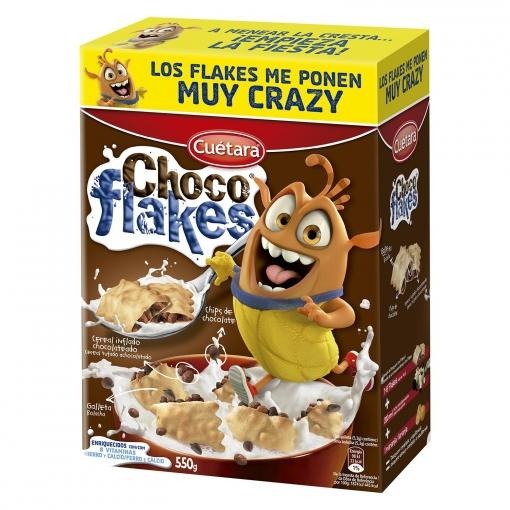

Choco Flakes® has become a highly recognised product in the Spanish market for children’s biscuits.
The ‘charm’, if we may use that term, of the invention protected by EP’528 lies in a biscuit with granular material (puffed cereals) that offers a new way of enjoying both cereal and biscuits simultaneously, while preserving the distinct identity of each component. The sensory experience in terms of flavour, texture, and appearance is especially appealing to children, as the two elements, although combined in one product, remain separate to taste, see, and play with.
Gullón’s marketing of its Favorita Choco Cereales triggered a claim by Cuétara requesting a declaration of infringement of claims 1 to 3 of EP’528. The Court confirmed the infringement of claims 1 and 2, which relate to the biscuit itself, as well as claim 3, which protects the manufacturing process.
In response to the infringement claim, Gullón challenged the validity of the patent, which had been granted without any opposition before the EPO. The counterclaimant argued lack of novelty for claims 1 and 2, lack of inventive step for claims 1, 2 and 3 and insufficiency of disclosure for claim 3.
Notably, in relation to both the novelty and inventive step attacks, Gullón relied on two very old pieces of prior art. As for the inventive step objection, the selected starting point had been disclosed over 100 years ago, which in itself is indicative of inventive step. Cuétara and the Court considered that the piece of prior art chosen by Gullón as the closest was very far from Cuétara’s patent, both temporally and technically. The Court also rejected Gullón’s attempt to reformulate the technical problem in a less ambitious manner.
One of the most interesting aspects of this case is that Cuétara argued that its patent should be regarded as a ‘problem invention’, which consists precisely of identifying a problem that had not previously been recognised in the prior art. In such inventions, the identification of the problem is considered to be the main contribution to the inventive merit of the claimed solution.
In this case, that inventive contribution corresponds to the aforementioned ‘2-in-1’ (but still preserving the 2) feature of the biscuit protected by EP’528. The technical problem was the development of a filled biscuit that allows the filling material to remain physically separate from the biscuit layers, thereby enabling a clear distinction between the flavours of the dough and the filling. Cuétara maintained that this problem had never been addressed before, as none of the prior art documents sought to solve it.
In this regard, the Court noted that the counterclaimant had ignored the technical problem on the basis of which the patent was granted, and that its inventive step argument was retrospective: “With regard to the alleged lack of inventive step, the analysis is retrospective and proposes as the closest prior art (…), a document dating back almost 100 years prior to the filing date of the Cuetara patent, without even providing a single reason to justify why a person skilled in the art would have started from there (…), and proposes the reformulation of the technical problem to analyse the lack of inventive step, disregarding the technical problem of the patent (…) on the basis of which the EPO examiner considered that it met the requirement of inventive step”.
The Court ultimately dismissed the invalidity arguments.
Finally, it should be noted that Gullón has filed an appeal against the Judgment of Commercial Court No. 4 of Valencia, so the decision is not yet final.